
Public engagements on the draft National IP Policy concludes
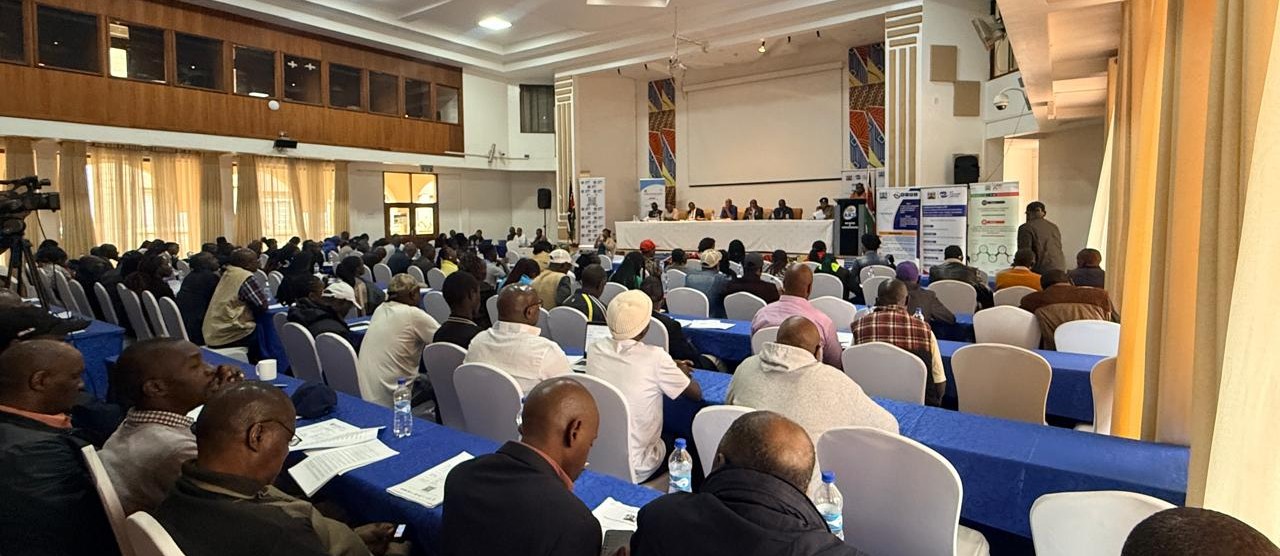
Photo: Participants following the proceedings during the Public Participation Forum held at KICD, Nairobi, on 31st July, 2026
The countrywide public participation forums on the Draft National Intellectual Property Policy and Strategy, 2026 concluded with the residents of Nairobi and its environs airing their views during an event held at the Kenya Institute of Curriculum Development (KICD) in the country’s Capital City.
The Ministry of Investments, Trade and Industry, in collaboration with a group of State Agencies held similar forums in Kisumu, Kakamega, Eldoret, Garissa, Embu, Nyeri and Mombasa from 27th - 31st July, 2026. Dr. Juma Mukhwana, the Principal Secretary, State Department for Industry, said Intellectual Property (IP) is no longer just a legal mechanism; it is the cornerstone of Kenya’s national development. “In today’s global economy, our greatest wealth is not found beneath the soil, but in the minds, innovations, and heritage of our people,” he said in a speech read in all the public participation events.
The Agencies the Department collaborated with in the development of the draft document include the Institute, Anti-Counterfeit Authority (ACA), Kenya Copyright Board (KECOBO), Kenya Plant Health Inspectorate Service (KEPHIS), Kenya National Innovation Agency (KeNIA) and National Research Fund (NRF). Dr. Mukhwana said the Policy provides a comprehensive roadmap to transform these ideas into high-yielding strategic assets across five key pillars of our economy, including:-
Amplifying the creative arts
He observed that the country's film, music, fashion, and digital content sectors are multi-billion-shilling industries powered by brilliant young minds. Yet, for too long, its artists have lost revenue to systemic piracy and weak copyright enforcement. "This policy provides robust mechanisms to protect original works, ensure fair compensation, and establish structures for digital rights management so that our creatives can fully commercialise their talents," said Dr. Mukhwana.
Safeguarding cultural issues and heritage
Kenya is rich in traditional knowledge, genetic resources and cultural expressions. From unique community beadwork to indigenous medicinal practices, the country's heritage is vulnerable to biopiracy and unauthorized exploitation. "This Strategy sets up legal safeguards and benefit-sharing frameworks, ensuring that local communities retain ownership and directly profit from their heritage," said the PS.
Driving tech innovation
Dr. Mukhwana said Kenya, as the Silicon Savannah, leads the region in software, fintech and digital platforms. "This Policy simplifies the patenting process for local software developers, protects utility models, and incentivizes tech startups," he said. He noted that by securing IP, the country would create a predictable environment that attracts venture capital and accelerates homegrown technological solutions.
Revitalizing manufacturing
The PS noted that a competitive manufacturing sector relies heavily on industrial designs, trademarks, and trade secrets. "This framework strengthens the fight against counterfeits and illicit trade, which currently undermine genuine local manufacturers," said. In this regard, he said, protecting industrial property rights encourages local industries to invest in high-value product design, branding, and factory automation.
Boosting agriculture
He noted that agriculture remains the backbone of our economy. "Our farmers and researchers need protection for new plant varieties to adapt to climate change and boost food security," he said. This Policy, he noted, seeks to enhances plant breeders' rights, safeguarding agricultural research while promoting Geographical Indications (GIs) to give premium international branding to products like Kenyan coffee and tea.
Strengthening institutional ecosystem
Dr. Mukhwana said that, to achieve these goals, the Policy and Strategy aims to harmonise, strengthen, and leverage the unique strengths of the country's key regulatory bodies and agencies. "A well-coordinated institutional framework is vital to transition Kenya into a knowledge-based economy," he said.
In a speech read during the Kisumu, Kakamega and Nairobi forums, the Institute’s Managing Director, John Onyango said the country’s IP landscape has tremendously changed over the last two decades. “Digital innovation, the creative economy, traditional knowledge and other sectors of the economy need a modern and robust IP policy,” he said in the speech, which was read by his Deputy in Charge of Technical Services, Stephen Ngeno. He said its scope is wide enough as it covers the whole spectrum of IP — patents, utility models, industrial designs, trade marks, trade secrets, geographical indications, copyright, plant breeders' rights, traditional knowledge, genetic resources and folklore — including digital and AI-driven innovation. “This draft Policy seeks to make IP a tool for job creation, wealth generation and cultural protection for every Kenyan,” said Onyango.